Managed Drone Docks for UK Solar Farms
Continuous solar asset monitoring without sending a pilot to site every time. Drone docks — often called drone-in-a-box systems — run automated inspections on schedule or on demand. Futurewise Aerial helps UK operators plan, deploy and run them, then turns the captured imagery into warranty-ready inspection data.
The Future of Solar Farm Inspection
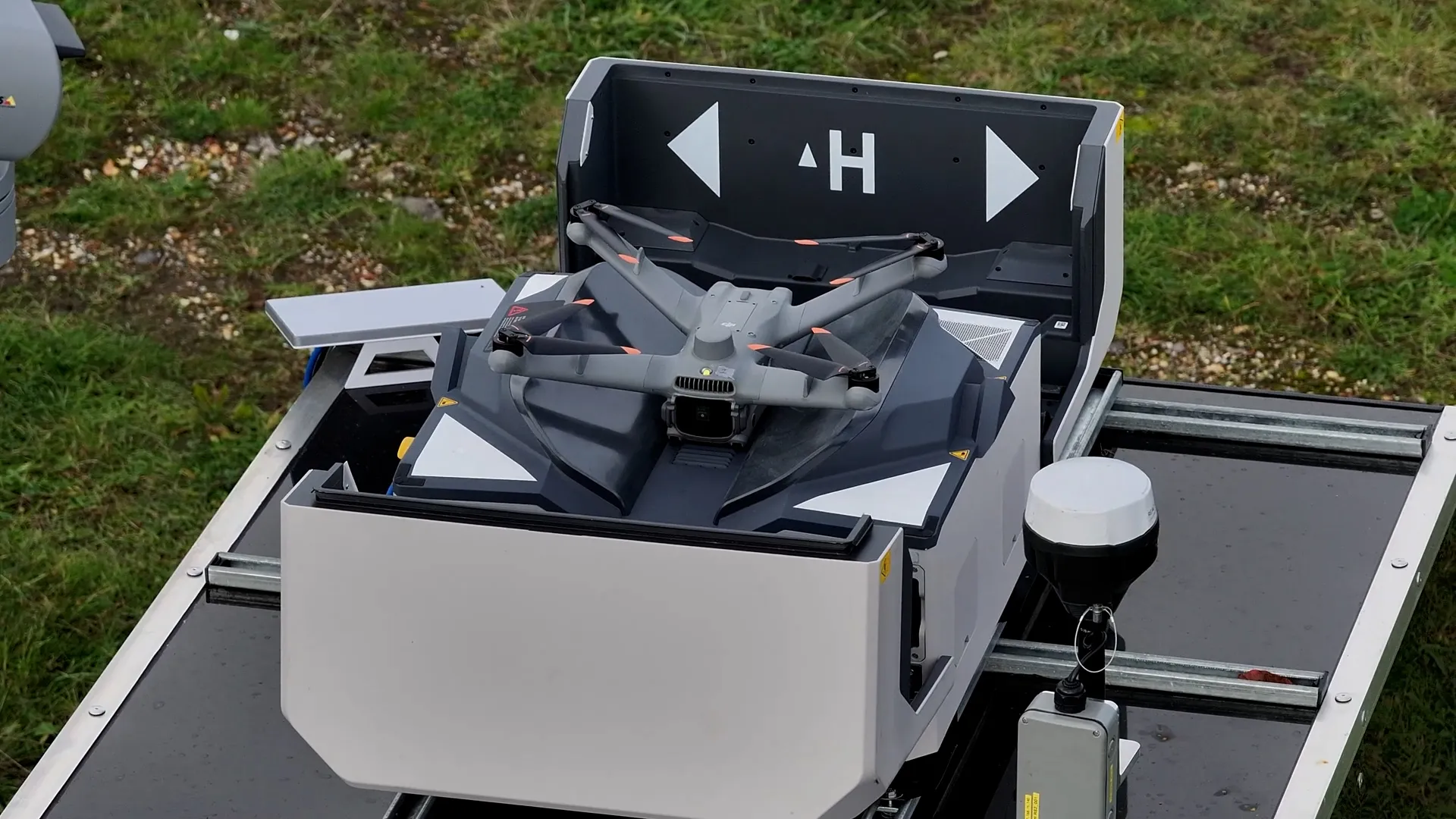
Drone docks — often called drone-in-a-box systems — can give solar operators a practical route to more frequent site monitoring. Traditional drone inspections require a pilot to travel to site, set up equipment, fly the mission, and process the data, which becomes expensive and limits how often you can inspect.
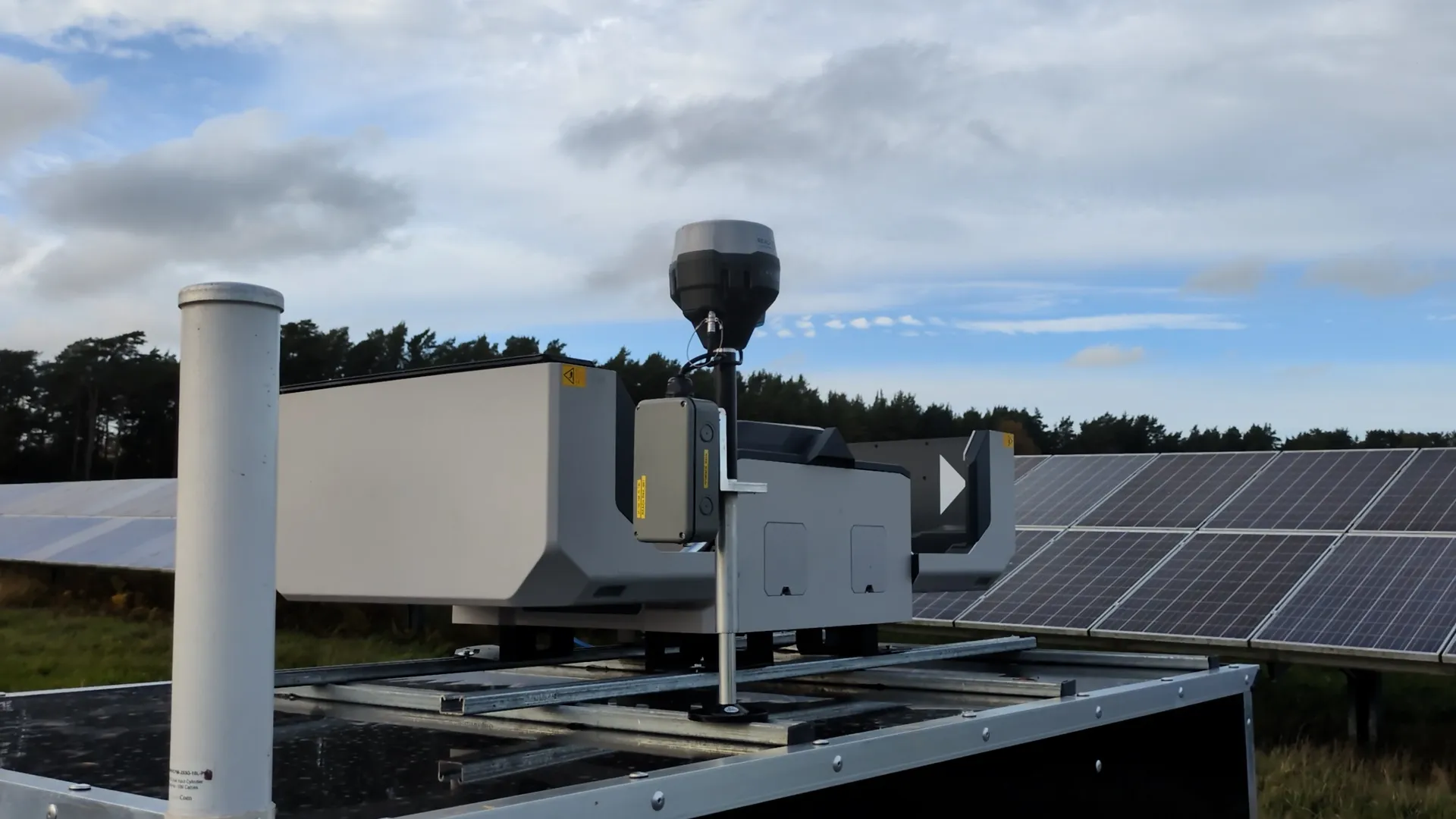
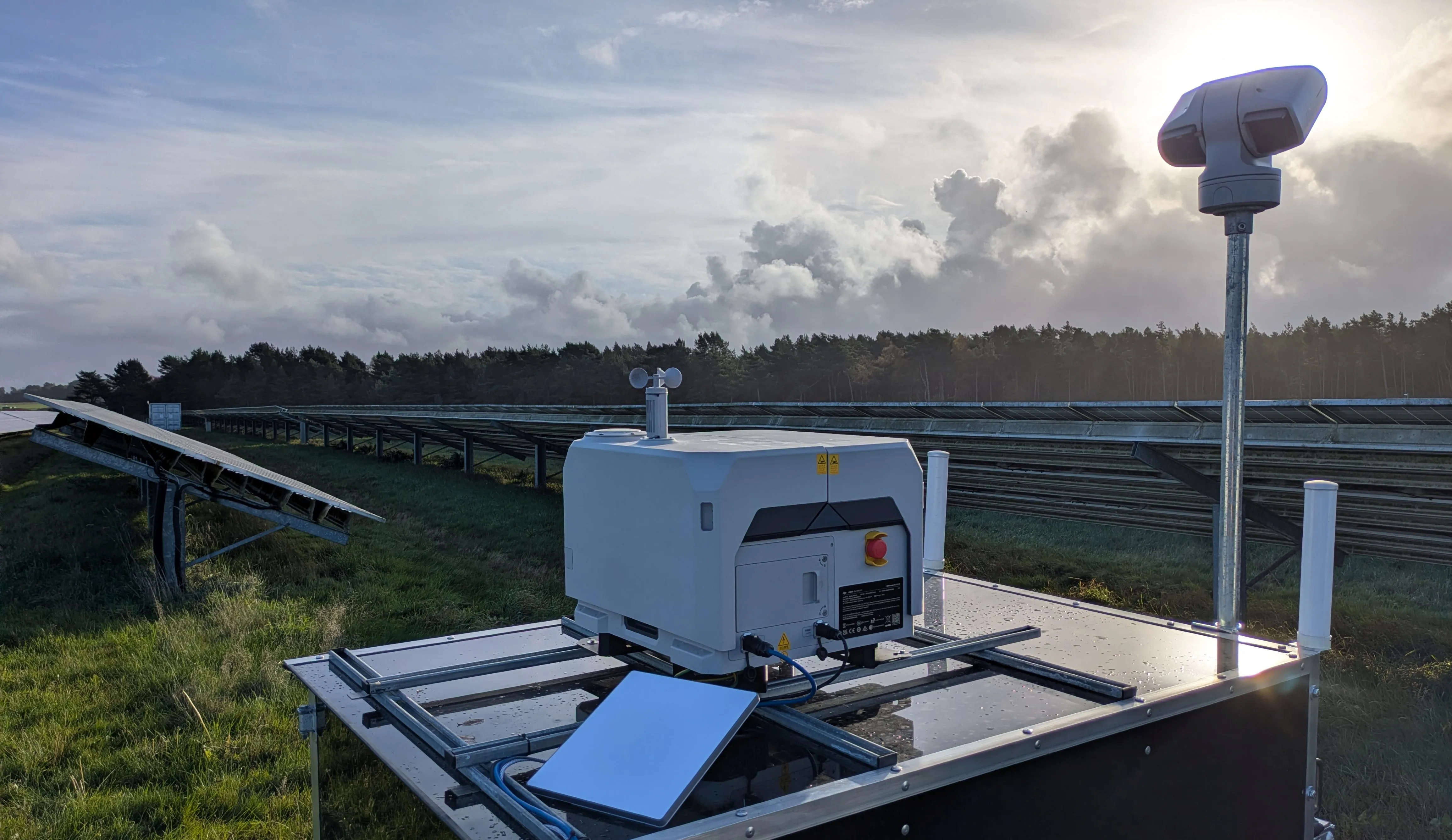
A permanently installed dock houses a drone on-site, ready to launch automated solar farm inspection missions on schedule or on demand — a step-change in UK solar asset monitoring for operators managing large portfolios or remote sites.
Futurewise Aerial is building the full managed service around that dock: assessing where it fits, planning and deploying it, running the monitoring programme, and turning captured imagery into useful inspection data — so your team receives finished results, not another system to operate. It starts with an honest look at feasibility, because a dock only earns its place on the right sites.
Drone Dock Feasibility for UK Solar Farms
A drone dock is a significant investment, and it isn't the right answer for every site. Before any operator commits to hardware, we help assess whether automated inspection genuinely fits the requirement. It's the same honest scoping we bring to work for asset managers and O&M contractors. The factors that matter most:
Site Layout & Access
Array geometry, terrain, obstructions, and how easily a dock can be sited and serviced all affect whether automated operation is practical.
Inspection Frequency Required
The case for a dock strengthens with how often you genuinely need to inspect. Occasional surveys rarely justify the investment; frequent monitoring can.
Data Outputs Needed
Visual inspection, thermal inspection, and serial number verification each place different demands on sensors and capture quality. We scope the dock to the outputs that matter.
Operational & Safety Considerations
On-site automated flight requires careful operating procedures, maintenance access, and safety planning around live solar infrastructure.
Integration With O&M Workflows
A dock is only useful if its imagery reaches the right people and feeds your existing maintenance and reporting processes.
Cost vs. Traditional Inspection
For some sites, scheduled piloted inspection is more cost-effective than a fixed dock. We give an honest comparison before you commit to hardware.
Why Consider Drone Docks?
Increased Inspection Frequency
Move from annual or quarterly inspections to weekly or even daily monitoring. Catch issues earlier, respond faster, and maintain tighter control over asset performance.
Reduced Operational Costs
Eliminate repeated mobilisation costs. Once installed, automated inspections cost a fraction of manual deployments over time.
Remote Site Coverage
Sites that are difficult or expensive to access become easy to monitor. The dock operates autonomously regardless of location.
Consistent Data Quality
Automated flight paths ensure consistent coverage and image quality every time. No variation between pilots or missions.
Rapid Response
Trigger ad-hoc inspections when monitoring systems flag anomalies. Get eyes on the problem within hours, not days.
What Can a Drone Dock Monitor?
Repeat Visual Imagery
Consistent, scheduled high-resolution imagery for tracking module condition over time.
Thermal Imagery
Thermal capture where the chosen hardware, conditions, and flight parameters support it — useful for spotting hotspots and electrical anomalies.
Change Detection
Comparing imagery across flights to surface new defects, damage, or developing issues between full inspections.
Site Condition Observations
Vegetation encroachment, access-route obstructions, and general site condition that affect generation and access.
Follow-Up Inspection Triggers
Targeted flights in response to performance alerts or underperformance, getting eyes on a problem area quickly.
Imagery for Our Workflows
Captured data that can feed Futurewise's inspection and analysis services, including serial number verification and defect review.
The same imagery can feed our visual inspection and thermal inspection analysis. Bear in mind that what a dock can reliably detect depends on capture quality, sensor choice, operating conditions, and proper analysis — an automated system surfaces issues for review rather than diagnosing everything unaided.
Rapid Security Response From the Dock
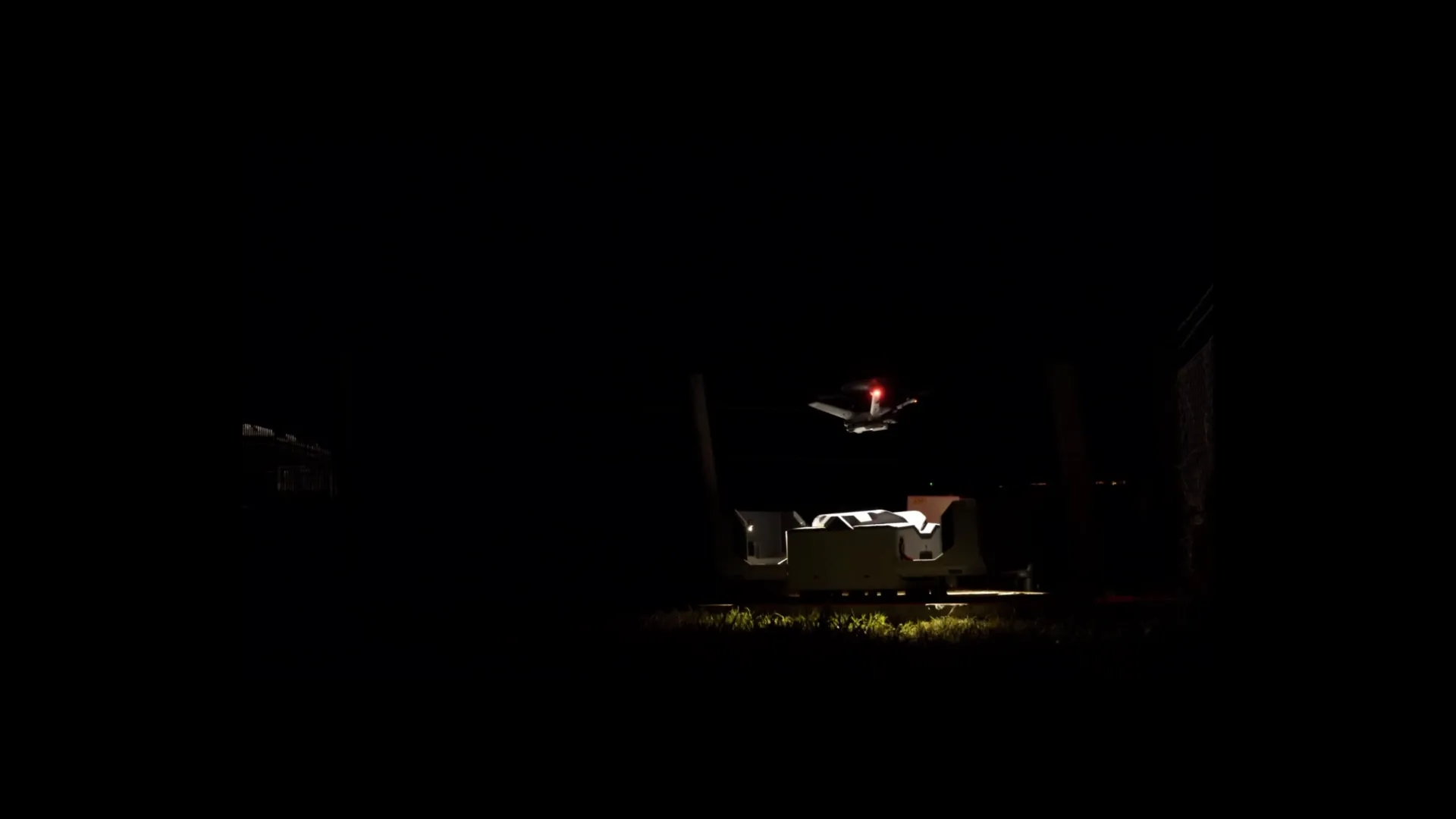
The same dock can support site security. When triggered by CCTV or other detection systems, the drone launches automatically and gets eyes on the area within minutes — with zoom, thermal and night-vision cameras, AI person and vehicle detection to keep track of a target, and a live feed that can be shared with control rooms and remote stakeholders.
Drone-in-a-dock security response, from alarm to return
How We Help
Futurewise Aerial supports solar operators across the whole lifecycle of a drone dock — from the first feasibility check to running the dock and delivering the data.
Feasibility Assessment
We assess your sites and portfolio to confirm where a dock genuinely earns its place. Not every site suits automated operation — you get an honest evaluation before any spend.
Technology Selection
The drone dock market is evolving rapidly. We help you navigate the options and select hardware that meets your requirements and integrates with your existing workflows.
Deployment & Installation
From site surveys to installation coordination, we plan and project-manage deployment so the dock is sited, commissioned, and operating with minimal disruption to the site.
Managed Operation
Once a dock is live, we can run the monitoring programme for you — scheduled and on-demand flights, data offload, and routine checks — so your team receives inspection results, not another system to maintain.
Data Processing & Reporting
A dock generates imagery; imagery still needs processing. We analyse and report on what the dock captures, including serial number verification and defect detection, feeding it into your O&M and asset-management workflows.
Is a Drone Dock Right for You?
A managed dock pays off fastest in specific situations. It tends to make most sense for:
Large Portfolios
Operators managing multiple sites where inspection costs add up quickly across the portfolio.
Remote Sites
Locations where mobilisation is expensive or logistically difficult to coordinate.
High-Value Assets
Sites where early fault detection has significant financial impact on revenue.
Performance-Critical Operations
Where frequent monitoring is essential for contractual or operational reasons.
If you're managing a single site with easy access, traditional inspection services may be more cost-effective. We'll help you determine the right approach.
UK Operational Considerations
Automated drone operations in the UK require careful planning. Site permissions, airspace, operating procedures, safety cases, and the level of autonomy all affect what is practical at a given site.
Futurewise Aerial can help solar operators understand the inspection requirement and plan a realistic route forward — but regulatory approval and operating permissions must be assessed for each deployment. We won't imply that automated flight is approved by default, or that a dock removes the need for proper operational planning.
See Our Services in Action
Serial Number Capture Results
See how our aerial technology delivers 99%+ accuracy at 8x speed.
View Case Study →AI Mismatched Module Detection
Automated drone imagery + AI analysis replacing manual inspection.
View Case Study →Man vs Drone: The Statistics
Data-driven proof of aerial inspection advantages across 7 UK sites.
View Case Study →Frequently Asked Questions
What is a drone dock (drone in a box)?
A drone dock — also called drone in a box — is a permanently installed station that houses a drone on-site. It launches automated inspection missions on schedule or on demand, captures data, returns to recharge, and uploads results — all without a human pilot on-site.
Is a drone dock right for my solar farm?
Drone docks make most sense for operators managing large portfolios, remote sites where mobilisation is expensive, high-value assets where early fault detection has significant financial impact, or performance-critical operations requiring frequent monitoring. For single sites with easy access, traditional inspection services may be more cost-effective.
How often can a drone dock inspect my site?
Unlike traditional inspections limited to annual or quarterly schedules, drone docks enable weekly or even daily monitoring flights. You can also trigger ad-hoc inspections when monitoring systems flag anomalies, getting eyes on the problem within hours.
What data can an automated drone dock capture?
Drone docks can capture the same visual and thermal imagery as piloted inspections. However, the data still needs processing — we provide ongoing support to analyse imagery captured by your automated systems, including serial number verification and defect detection.
Do you run the drone dock, or just advise on it?
Both — and increasingly the former. We're building toward a fully managed service: we assess feasibility, help select the right hardware, plan and support deployment, and where it fits we operate the dock and handle the data, so your team receives finished inspection results rather than a system to run. Every engagement still starts with an honest feasibility check, because a dock only makes sense on the right sites.
Are drone docks suitable for UK solar farms?
They can be, but suitability depends on the site. UK conditions — weather, airspace, site access, and operating permissions — all affect what's practical. Drone docks tend to suit larger portfolios, remote sites, and operations that need frequent monitoring. We assess each site honestly rather than assuming a dock is the right answer.
Can a drone dock replace manual solar farm inspections?
Not entirely. A dock can handle routine, repeat monitoring and surface issues earlier, but detailed inspection and reporting still depend on capture quality, sensor choice, and proper analysis of the imagery. Most operators use docks to complement scheduled piloted inspections, not to remove the need for them altogether.
Do drone docks work with thermal inspection?
Thermal capture is possible where the dock's hardware, the operating conditions, and the flight parameters support it. Thermal imagery from an automated dock can help flag hotspots and anomalies for follow-up, but reliable thermal assessment still depends on appropriate sensors and conditions. See our thermal inspection service for what radiometric thermography involves.
Do automated drone inspections still need data analysis?
Yes. A dock captures imagery, but that imagery still needs processing, review, and reporting to become useful inspection data. We provide ongoing support to analyse imagery from automated systems, including serial number verification and defect detection.
Explore Your Options
Considering drone docks for your solar portfolio? We can help you evaluate whether it's the right move and guide you through the process.